December 3, 2012
“The default network and the opposing domains hypothesis”. Tony Jack. Rotman Research Institute, Toronto, Canada.
Read more →We investigate high-level cognitive processes using brain imaging (fMRI), behavioral paradigms and introspective reports — at the intersection of neuroscience, psychology and philosophy.
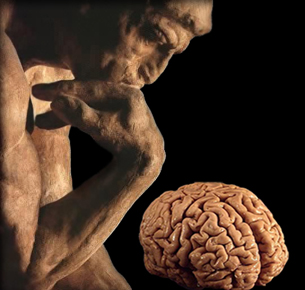
“‘Thoughts’ and ‘things’ are names for two sorts of object, which common sense will always find contrasted and will always practically oppose to each other.”
— William James (1904) Does ‘Consciousness’ Exist
The Brain, Mind and Consciousness laboratory investigates high-level cognitive processes using brain imaging (fMRI), behavior and introspective reports. We are particularly interested in areas of overlap, as well as separation, between psychological processes involved in social cognition, mechanical reasoning, attention and self-awareness.
Our work is informed by neuroscience, psychology and philosophy. The laboratory is situated in the new and unique transdisciplinary Department of Cognitive Science at Case Western Reserve University; and part of Case’s Cognitive Neuroscience Initiative. We are involved in collaborations across the University and beyond, including the Department of Neurology in the Medical School, the Department of Organizational Behavior in the Weatherhead School of Management, and the departments of Communication Sciences and Philosophy in Arts and Sciences.
fMRI brain imaging to map the neural architecture of cognition
Behavioral studies of social and mechanical reasoning
Conceptual analysis of consciousness and introspection
We explore the overlaps and separations between distinct modes of cognition and their neural substrates.
Everyone knows the geek stereotype — the kid who is good at math and science but socially awkward. Is there any real basis for this in the brain? Engaging in scientific reasoning turns off core brain areas involved in social cognition, and vice versa.
How can coaching relationships best help individuals realize their potential? We use cognitive neuroscience to reveal the mechanisms of effective helping, guided by how different cognitive styles work in the brain.
We have developed methods for assessing topographic organization on the cortical surface, examining retinotopic organization of higher visual areas involved in attention and its relationship to individual performance.
Most people agree that the body houses the mind. We examine why people resist the view that feelings are nothing but neural activity, and how our sense of morality lies at the heart of our intuitions about consciousness.
We combine cutting-edge imaging technology with rigorous behavioral science and philosophical analysis.
Functional MRI allows us to visualize brain activity with millimeter precision while participants perform cognitive tasks. We use it to map the neural architecture of consciousness and social thought.
Carefully designed experimental paradigms measure reaction times, accuracy and decision patterns. We recruit healthy adult participants and clinical populations including individuals with dementia and autism spectrum disorders.
We treat first-person phenomenal reports as valid scientific data, developing protocols to elicit and analyze subjective experience rigorously alongside objective neural measurements.
The BMC Lab is embedded in a rich network of departments and institutions at Case Western Reserve University.
“The default network and the opposing domains hypothesis”. Tony Jack. Rotman Research Institute, Toronto, Canada.
Read more →
“How Analytical Tasks Suppress Neural Networks Used for Social Cognition and Visa Versa” and “An fMRI Study of Followers Reactions to Moments…
Read more →
“What Introspection Teaches: The Brain Reveals Two Ways to Understand the Mind”. Tony Jack. Philosophy of Science Association 2012, Panel on “Introspective…
Read more →
“The Neuroscience of Hope. The Hope of Neuroscience. fMRI of Coaching with Compassion”. Tony Jack. School of Business, Aarhus University, Denmark.
Read more →Whether you want to contribute to science as a volunteer or pursue graduate research, we welcome you.
Want to earn some cash by participating in exciting research projects? We are currently recruiting participants. Sign up to participate in one of our studies by creating an account at our Experiment Management System.
Learn How to ParticipateIf you are interested in working in the lab as a student researcher, research assistant, graduate student or postdoctoral fellow, please email a current CV and a short description of your interest to the PI.
Contact Prof. Jack